How Much Do Notaries Make? Real Income Numbers for 2026
An honest breakdown of notary and loan signing agent income — general notary work vs. loan signings, part-time vs. full-time, and what actually moves the number.
Introduction
"How much do notaries make?" is the most-searched notary question there is, and the answers online swing wildly — from "$15 a signature" to "six figures from your couch." Both are technically true and neither is useful. Here's the honest breakdown.
It depends entirely on which kind of notary work
There are two very different income models hiding under the word "notary":
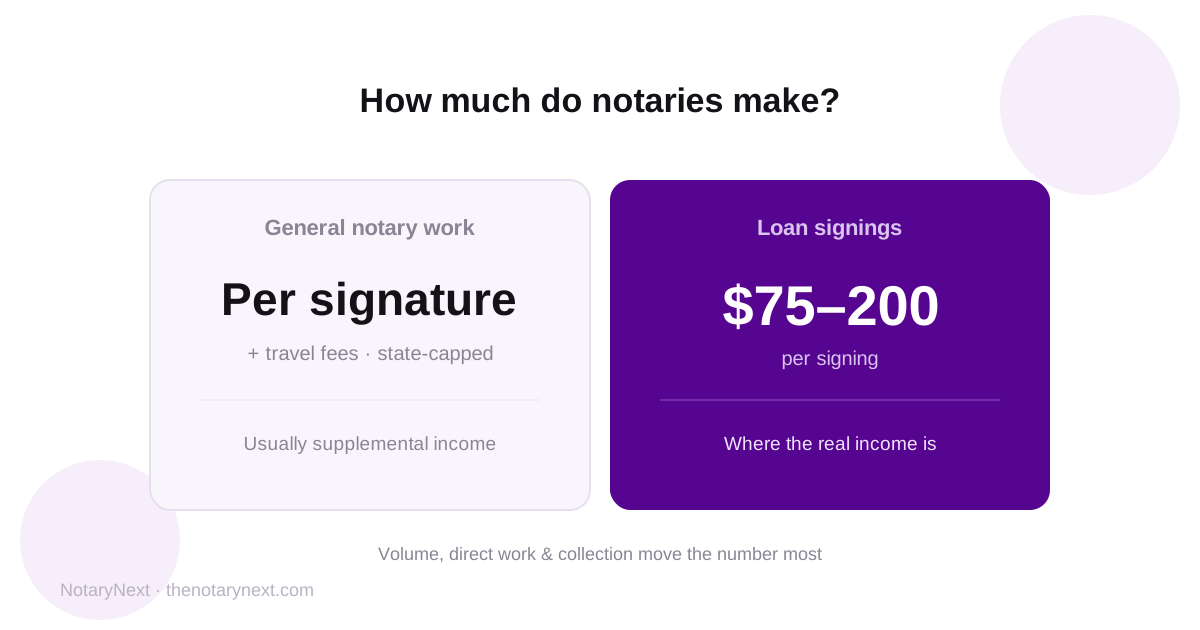
General notary work (GNW): notarizing individual documents — a single signature, an acknowledgment, a jurat. Your fee per notarial act is capped by your state (often just a few dollars to $15 per signature), plus whatever travel fee you charge to come to the client. GNW income comes from volume and travel fees, not per-signature rates. On its own, it's usually supplemental income.
Loan signing (LSA work): guiding borrowers through mortgage and refinance packages, priced per signing rather than per signature. This is where the real money is — commonly $75–$200 per signing depending on whether you're working through a service or directly, your market, and the signing type.
Most notaries who earn meaningful income do loan signings, general notary work, or both — and the mix shapes the number.
Part-time vs. full-time
Part-time / side hustle: Many notaries do this on evenings and weekends around another job. Income here ranges from a few hundred to a couple thousand dollars a month depending on how many signings they take and their market. Realistic, flexible, supplemental.
Full-time: Notaries who go all-in — multiple signings a day, several signing services plus direct title relationships, a strong local presence for GNW — can build this into a full income. The ceiling depends heavily on your market's real estate activity, your radius, and how well you run the business side.
What actually moves your income
Three levers matter far more than your per-signing rate:
Volume — signings per week, driven by how many services you're active on and how strong your direct relationships are.
Direct vs. service work — the same signing pays meaningfully more direct than through a service. Experienced agents shift their mix toward direct over time.
How much you actually collect — this is the invisible one. Signing agents lose real income to unpaid or forgotten invoices, not to low rates. An agent who does $4,000 of signings but only chases down $3,200 of it has a collection problem, not a pricing problem.
The market reality nobody mentions
Loan signing volume rises and falls with the real estate and refinance market. High-interest-rate periods mean fewer refinances and fewer signings; active markets mean more. Building GNW and direct relationships makes your income more stable across those cycles, because you're not entirely dependent on refinance volume.
Keeping what you earn
Here's the part that quietly separates notaries making good money from those leaving it on the table: collection and records. Every signing invoiced the same day, every overdue title company followed up, every fee tracked. NotaryNexthandles that layer — same-day invoicing, automatic 30/45/60 day reminders, and clean per-job records — so the income you earn is the income you actually bank. Free for 30 days.
Related: How to become a loan signing agent · Loan signing agent fees · How to get more notary clients


