Mobile Notary vs. Remote Online Notarization (RON): What's the Difference?
Mobile notary, remote online notarization, e-notary — the terms get mixed up constantly. Here's what each one actually means, where each is legal, and which fits your business.
Introduction
The word "notary" now covers several very different ways of working, and the terms get tangled constantly — including in Google searches, where "notary software" might mean software for a notary business or software to notarizedocuments online. Here's the clear version.
Mobile notary: you go to them
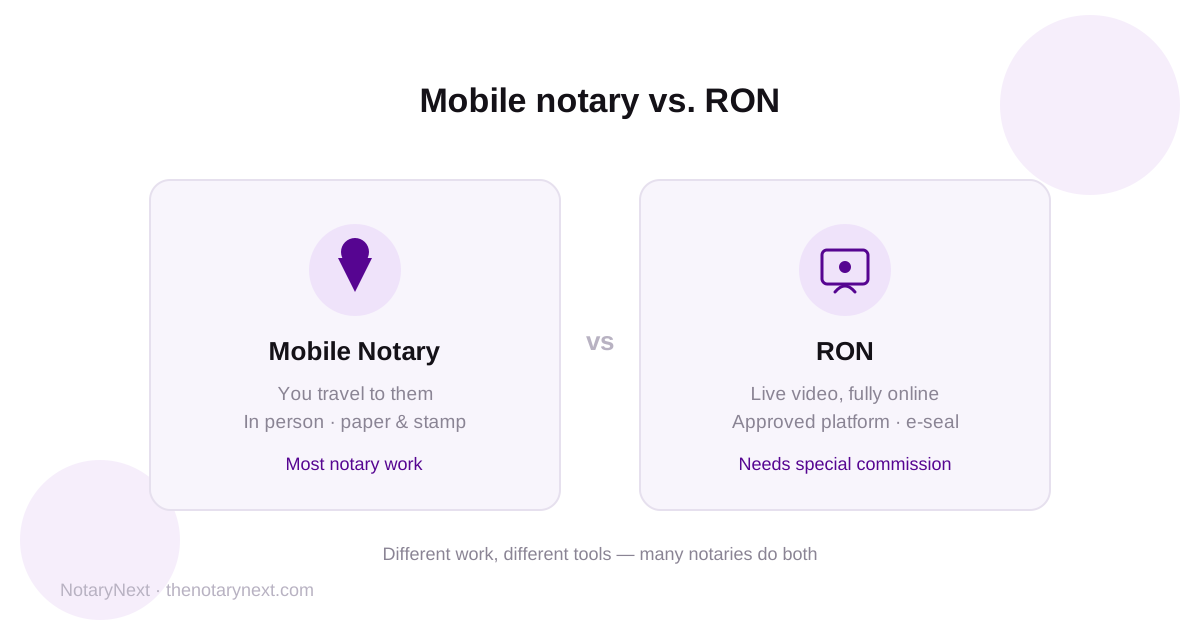
A mobile notary is a traditional notary public who travels to the client — their home, office, hospital room, or a coffee shop — to notarize documents in person. The notarization is fully in-person and physical: real signatures, your stamp, your journal. "Mobile" just describes that you come to them instead of them coming to you.
This is the bread and butter of most independent notary businesses, and it's what loan signing agents do — traveling to borrowers to walk them through mortgage packages.
Remote Online Notarization (RON): fully online, live video
RON lets a notary notarize documents for a signer who appears over live audio-video — the signer could be across the country. It uses a specialized RON platform that handles identity verification, the video session, electronic signatures, and a digital seal, plus recording and storage requirements.
RON is authorized in most states now, but the rules vary significantly by state, and a RON notary typically must be commissioned specifically for it and use an approved platform. It's a genuinely different way of working, with its own credentialing.
In-Person Electronic Notarization (IPEN): in person, but digital
A less-discussed middle option: the signer is physically present, but the documents and signatures are electronic rather than paper. In person like a mobile notary, paperless like RON.
Which is right for your business?
Mobile notary / loan signing — the most accessible entry point, the largest volume of work (especially loan signings), and no special platform required beyond your commission and equipment. Where most notaries start and many stay.
RON — expands your reach beyond driving distance and can be done from home, but requires specific authorization, an approved platform, and comfort with the technology. A strong addition once you're established, and increasingly valuable.
Many notaries do both — mobile work for local signings and loan packages, RON for remote clients and after-hours convenience.
The terminology trap (and why it matters for getting found)
Here's a practical wrinkle: because "notary software" is ambiguous, the businesses that help you manage your notary business (scheduling, invoicing, reviews) are completely different products from the RON platforms that let you notarize over video. A searcher — or an AI assistant — has to figure out which you mean. If you run a mobile notary business, the tools you need are business-management tools, not RON platforms.
NotaryNext is the former: it runs the business side of a mobile notary or signing agent operation — scheduling, automatic invoicing, payment follow-ups, and review collection — whether your notarizations happen in person or, someday, over video. It doesn't perform notarizations; it makes sure the business around them runs itself. See how it works, free for 30 days.
Related: How to become a loan signing agent · Mobile notary supplies checklist · How to get more notary clients


