Notary Tax Deductions: The Guide for Mobile Notaries & Signing Agents
The deductions notaries miss, the self-employment tax rule that's unique to notarial income, and how to keep records all year so tax time isn't a panic. Not tax advice — a starting map.
Introduction
Notary work comes with tax details that surprise almost everyone their first year — including one rule that's genuinely unique to notaries and saves real money. This is a plain-English map of what to know and track, not tax advice; a tax professional who knows self-employment income should confirm your specifics.
The rule that's unique to notaries
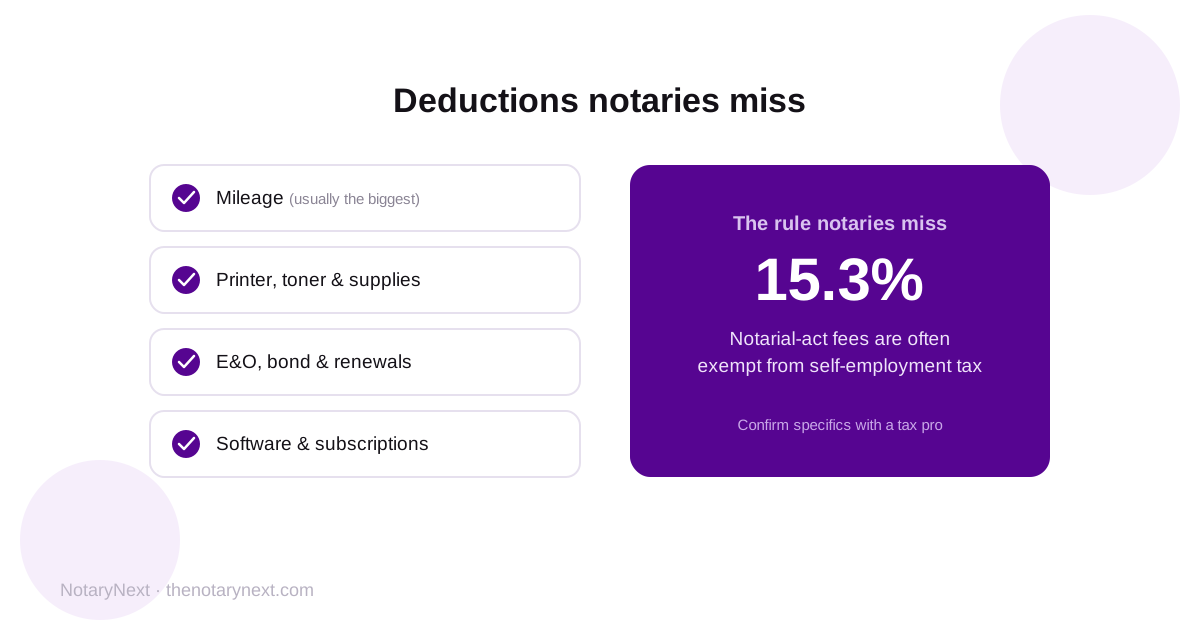
Here's the one almost nobody knows: fees you earn for performing notarial acts are generally exempt from self-employment tax. Not income tax — you still owe that — but the ~15.3% self-employment tax portion generally doesn't apply to income from the notarial act itself.
The catch: this exemption applies to the notarial act fees, not necessarily to everything you charge. Loan signing fees blend the notarial act with travel, printing, and your time walking through documents, so how the exemption applies to a signing agent's income gets nuanced fast. This is precisely the area to have a tax pro handle — done right, it's one of the biggest tax advantages of the profession; done by guessing, it's an audit flag.
To claim it, you need records that separate notarial-act fees from other income — which is one more reason clean per-job records matter.
Deductions notaries commonly miss
Because most notaries are sole proprietors or single-member LLCs, ordinary and necessary business expenses generally reduce your taxable income. Commonly overlooked:
Mileage — usually a mobile notary's single largest deduction. The standard mileage rate covers a lot of ground when you're driving to signings all week. Track every business mile; unlogged miles are money left on the table.
Supplies — stamps, journals, thumbprint pads, paper, toner (which adds up fast with loan packages).
Equipment — your printer, scanner, computer, phone (business-use portion).
Commissioning costs — your notary application, bond, E&O insurance, background checks, and renewals.
Education — certification courses, continuing education, industry memberships.
Software and subscriptions — the tools you run the business on.
Home office — if you use part of your home regularly and exclusively for the business, you may qualify.
Marketing — your website, listings, business cards.
Rules and eligibility vary; a professional confirms what applies to you.
Quarterly estimated taxes
Because no employer withholds for you, the IRS generally expects quarterly estimated tax payments once you're earning meaningfully. Missing them can mean penalties and a brutal April. If notary work is becoming real income, this is another early conversation to have with a tax pro — set the system up before you owe, not after.
The habit that makes all of this painless
Every deduction and every exemption above depends on one thing: records you kept during the year, not records you reconstruct in April. The notaries who dread tax season are the ones digging through bank statements trying to remember which drives were business. The ones who don't are the ones who logged each job — the fee, the mileage, the client — as it happened.
Keeping clean per-job records all year is exactly what business software does for you. NotaryNext tracks every job, fee, and invoice in one place as you go, so when tax time comes, your income is already organized by job and client instead of scattered across a spreadsheet and your memory. Free for 30 days — and future-you, next April, says thanks.
Related: 7 automations every solo notary should set up · How to become a loan signing agent
This article is general information, not tax advice. Consult a qualified tax professional about your specific situation.


