How Much Does a Notary Cost in 2026? (Complete Price Guide)
What you'll actually pay for a notary — standard per-signature fees, mobile notary travel charges, loan signing costs, and RON pricing — plus how to avoid overpaying.
Introduction
If you need something notarized, the cost depends far more on how you get it done than on the notarization itself. The stamp is cheap and often capped by law; what you're really paying for is convenience, travel, and specialization. Here's the complete breakdown of what a notary costs in 2026 — whether you're a customer trying to budget or a notary trying to price fairly.
The per-signature fee (and why it's capped)
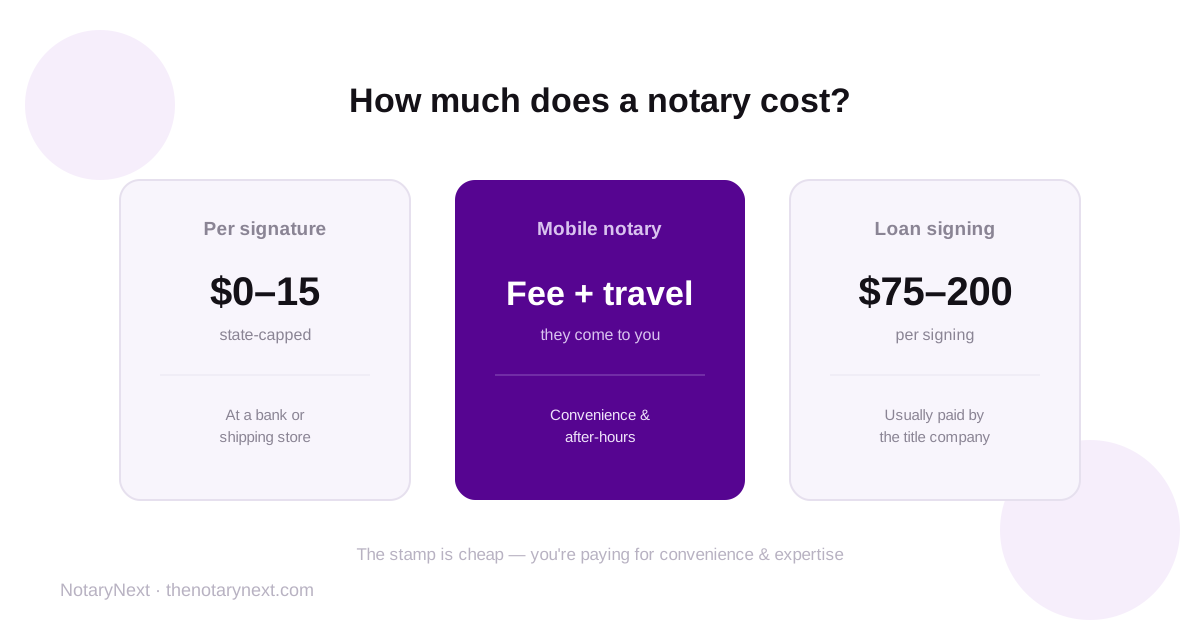
The core notarial act — the notary verifying your identity and witnessing your signature — is regulated. Most states set a maximum fee per notarized signature by law, and these caps are typically modest, ranging from a few dollars to around $15 per signature depending on the state. Some states set it as low as a couple of dollars; others allow more.
This is why the notarization itself is rarely expensive. If all you need is a single signature notarized and you go to a notary's location, you'll usually pay only that capped per-signature fee. Banks, shipping stores, and libraries sometimes offer notary services at or below these caps — occasionally free for account holders.
The catch: the cap applies only to the notarial act. Everything else — travel, after-hours service, specialized signings — is priced separately and legally so.
Mobile notary costs: paying for convenience
A mobile notary comes to you — your home, office, hospital, or wherever you are. Because they're traveling, they charge the capped notarial fee plus a travel fee, and the travel fee is where most of the cost lives.
Travel fees vary widely based on distance, time of day, and your market — a nearby daytime appointment costs less than a 40-minute drive at 9pm. Mobile notaries set these fees themselves (they're not capped the way the notarial act is), so it's reasonable to see a range from modest travel charges to more for distance, urgency, or after-hours service.
Why pay it? Because convenience has real value: no leaving work, no dragging documents (or an ill family member) somewhere, and same-day or evening availability. For time-sensitive or difficult-to-travel situations, a mobile notary's travel fee is usually money well spent.
Loan signing costs: a different model entirely
When the "notary" is a loan signing agent handling a mortgage or refinance package, the pricing model changes completely. These aren't billed per signature — they're billed per signing, because the job involves guiding a borrower through a large document package, often 100+ pages, with printing and scanning.
In most cases, the person paying for a loan signing isn't the borrower — it's the title company, escrow company, or signing service coordinating the closing. Loan signing fees commonly run $75–$200 depending on the market, the signing type, and whether the agent works directly or through a service. If you're a borrower, this cost is typically folded into your closing, not paid out of pocket to the notary directly.
Remote online notarization (RON) costs
RON — notarizing over live video — has its own pricing. Platforms that offer on-demand RON often charge a set fee for the first notarial act in a session plus a smaller fee for each additional one. The convenience is significant (notarize from anywhere, any time, no travel), and pricing reflects the technology and identity-verification involved. Exact costs depend on the platform and your state's rules.
What makes notary costs go up
If you're budgeting, these factors increase what you'll pay:
Travel distance — farther means higher travel fees
After-hours or weekend service — urgency and inconvenient timing carry premiums
Number of signatures/documents — the per-signature fee multiplies (within legal caps)
Specialized signings — loan packages, apostille assistance, hospital or jail signings, and estate documents involve more work and cost more
Same-day/emergency requests — immediate availability is a premium service
How to avoid overpaying
For a single, simple notarization: check whether your bank, a shipping store, or your local library offers it — often at or below the state cap, sometimes free.
When you need a mobile notary: ask for the total cost (notarial fee + travel) up front, so there are no surprises. A professional notary will quote it clearly.
Confirm your state's fee cap if you want to know the maximum for the notarial act itself — it's public information from your Secretary of State.
For notaries: pricing yourself correctly
If you're the notary, this same information is how you price without leaving money on the table or scaring clients off:
Charge your state's allowed notarial fee for the act itself — know your cap.
Set travel fees deliberately and quote them up front. Distance, timing, and urgency all justify different rates. Don't undercharge for the drive — your time and mileage are real costs.
Price specialized work accordingly. Loan signings, apostilles, and difficult signings are worth more than a single-signature acknowledgment.
Be transparent. Clients don't mind paying a fair, clearly-stated fee; they mind surprises on the invoice. Quoting the full cost at booking prevents payment disputes later.
And once you've set the right price, the challenge becomes collecting it — especially from title companies who pay on 30-to-60-day terms. NotaryNext generates a clear, itemized invoice the moment you complete a job — notarial fee, travel, and any extras spelled out — sends it automatically, and follows up on overdue payments at 30, 45, and 60 days so you actually get paid what you quoted. Free for 30 days.
The bottom line
For a simple notarization, expect to pay your state's capped per-signature fee — often just a few dollars, sometimes free at a bank. For a mobile notary, add a travel fee for the convenience of them coming to you. Loan signings and RON follow their own pricing models. The notarial stamp is cheap; what you're really paying for is convenience, travel, and expertise — and for the right situation, all three are worth it.
Related: Loan signing agent fees: what to charge · Mobile notary vs. RON · How much do notaries make?


