What Does a Notary Do? A Complete Guide to Notary Services
What a notary public actually does, the types of documents they notarize, what they can and can't do, and when you need one — explained in plain English.
Introduction
You've probably been told to "get it notarized" at some point and nodded along without being totally sure what that means. A notary public plays a specific and surprisingly important role in everyday legal life — and understanding it helps whether you need a notary, are thinking of becoming one, or just want to know what that stamp actually accomplishes.
What a notary public is
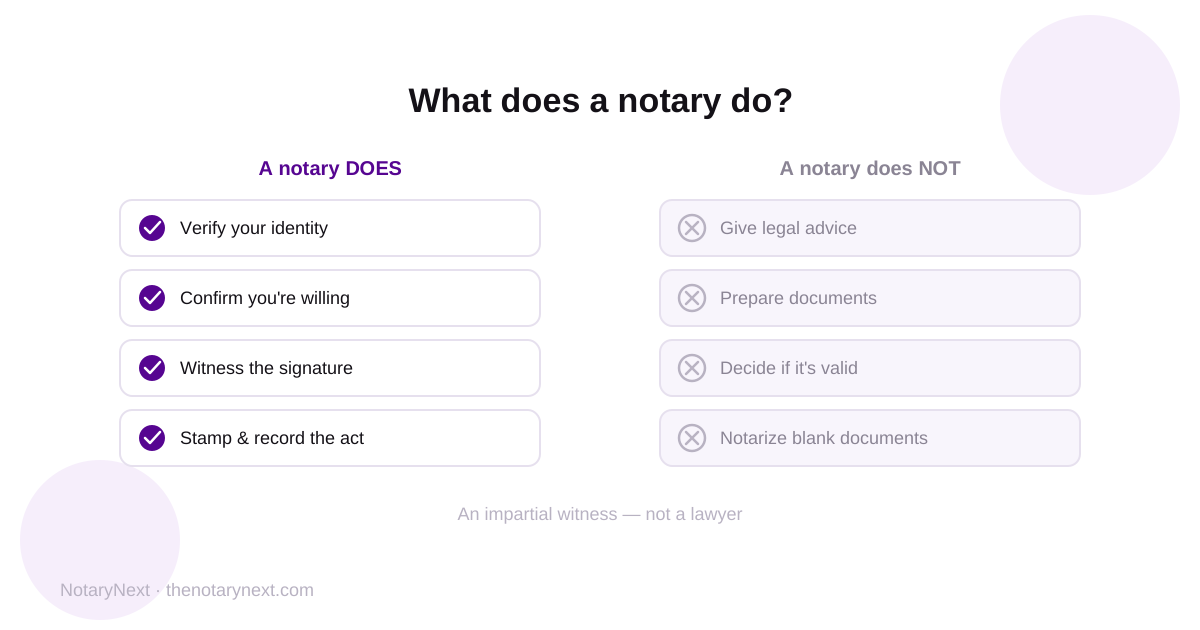
A notary public is an official commissioned by their state to serve as an impartial witness during the signing of important documents. The notary's core job is to deter fraud — by confirming that the people signing are who they say they are, that they're signing willingly, and that they understand they're signing. That verified, witnessed signature is what gives certain documents their legal weight and makes them accepted by courts, government agencies, banks, and other institutions.
Think of a notary as a trusted, neutral third party whose stamp says: "I confirmed this person's identity and watched them sign this, of their own free will." That assurance is valuable precisely because the notary has no stake in the transaction.
What a notary actually does during a notarization
When you visit a notary (or one comes to you), the process generally involves:
1. Verifying your identity. The notary checks a valid, government-issued photo ID to confirm you are who you claim to be. This is the heart of the job — no proper ID, no notarization.
2. Confirming your willingness and awareness. The notary makes sure you're signing of your own free will and aren't being coerced, and that you appear to understand what you're signing. They don't explain the document's legal meaning (that's a lawyer's job), but they confirm you're a willing, aware participant.
3. Witnessing the signature. You sign the document in the notary's presence. For most notarizations, signing beforehand doesn't count — the notary has to actually witness it.
4. Completing the notarial certificate. The notary fills out and signs the notarial wording, then applies their official stamp or seal.
5. Recording the act. Many states require (and best practice recommends) that the notary log the act in a journal — the date, the type of document, the signer, and how they were identified.
Common types of notarizations
Notaries perform several distinct acts, the most common being:
Acknowledgments — the signer confirms they signed a document willingly. Common for deeds, powers of attorney, and contracts.
Jurats — the signer swears or affirms that the contents of a document are true, and signs in front of the notary. Common for affidavits and sworn statements.
Oaths and affirmations — the notary administers a verbal promise of truthfulness.
Copy certifications — in some states, the notary certifies that a copy of a document is a true copy of the original.
Documents notaries commonly handle
You'll typically need a notary for documents like:
Real estate deeds and mortgage documents
Powers of attorney
Wills, trusts, and estate-planning documents (requirements vary)
Affidavits and sworn statements
Loan and refinance packages (handled by loan signing agents)
Adoption and custody paperwork
Vehicle title transfers
Certain business and financial documents
What a notary can NOT do
This is just as important as what they can do. A notary public generally cannot:
Give legal advice or answer "what does this document mean?" — that's practicing law
Prepare or draft legal documents for you (unless separately licensed to)
Decide whether a document is legally valid or recommend whether you should sign
Notarize a document with blank spaces meant to be filled in
Notarize for someone who can't be properly identified, appears coerced, or doesn't understand what they're signing
Notarize their own documents or ones in which they have a personal interest
These limits exist to keep the notary genuinely impartial. A notary who steps into giving legal advice is both exceeding their authority and creating liability.
Mobile notaries, loan signing agents, and RON
Not all notaries work the same way:
A traditional notary works from a fixed location — a bank, shipping store, or office.
A mobile notary travels to you, which is invaluable when you can't easily get to a notary (hospital stays, busy schedules, homebound signers). They charge a travel fee for the convenience. (What a mobile notary costs.)
A loan signing agent is a notary who specializes in mortgage and refinance signings, guiding borrowers through large loan packages. (How to become one.)
A remote online notary (RON) notarizes over live video, so the signer can be anywhere. (What RON is.)
When do you need a notary?
You'll generally need one whenever a document explicitly requires notarization — it'll usually say so, with a notarial section at the end — or when an institution (a bank, court, or government office) requires it before accepting a document. Common triggers: real estate transactions, powers of attorney, certain affidavits, and estate documents. When in doubt, the party requesting the document (the bank, the agency, the other side of a transaction) will tell you whether notarization is required.
For notaries: turning the service into a business
If reading this makes you think about becoming a notary — it's an accessible, flexible path (here's how to become one). And if you already are one, the difference between a hobby and an income is how well you run the business side: getting found by the people who need you, invoicing promptly, following up on payments, and collecting reviews.
That's what NotaryNext is built for — software made specifically for mobile notaries and signing agents that handles scheduling, client tracking, automatic invoicing, overdue payment follow-ups, and review requests, all in one place. It runs the business so you can focus on the notarizations. Free for 30 days, no credit card.
The bottom line
A notary public is an impartial, state-commissioned witness whose job is to verify identity, confirm willingness, and witness signatures — deterring fraud and giving documents the trust they need to be accepted. They don't give legal advice or decide validity; they confirm the who and the willingly. Whether you need one, want to become one, or were just curious what that stamp means — now you know exactly what a notary does.
Related: How to become a notary public · How much does a notary cost? · What does a mobile notary do vs. RON?


